
Strata pitch events continue attracting strong interest from global leading investors and have positioned it as a top channel for the best European deeptech startups raising Seed or Series A rounds.
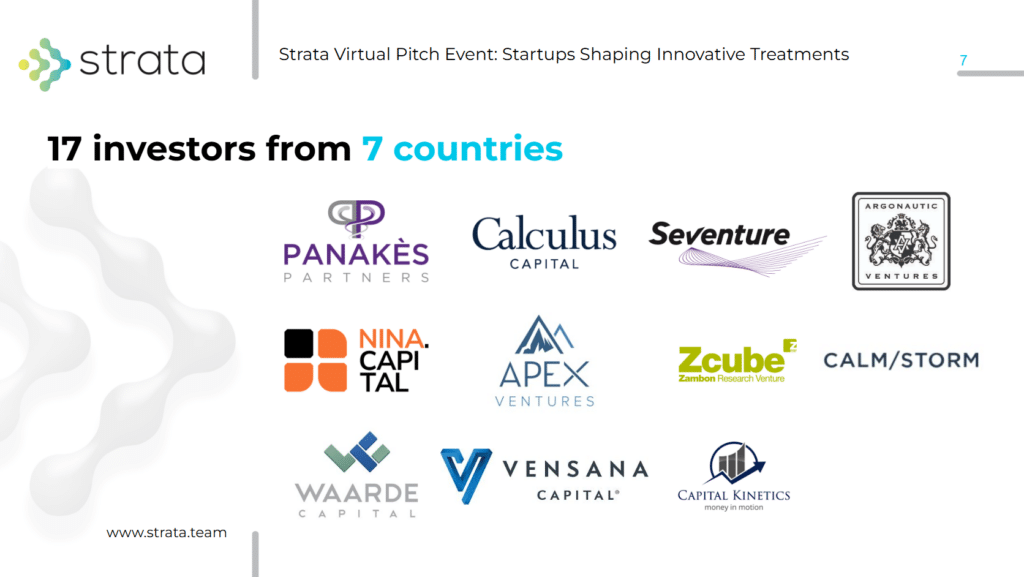
On 3rd June, 2026, our latest pitch event attracted 17 investors from 7 countries, who were pitched by four revolutionary startups in the vertical of innovative treatments. We want to thank investors and startups for participating!
Led by Tamas Szeker (Strata’s Innovation & Funding Growth Partner). pitching startups presented solutions focused on personalised brain stimulation therapy, AI-Powered echocardiography automation, stem cell therapy for osteoarthritis and sleep disorder diagnostic platform.
Strata will organize new investor meetings during 2026 focused on other verticals, so we will promptly be informing our community.
Looking forward to seeing you all again!
Background information
20 startups have already presented at Strata’s pitching events in front of more than 130 investors. Strata pitch events attract leading global investors looking for the most scalable European startups in the deeptech, medtech and sustainability verticals, with a focus on impact investing. The format is dynamic, includes short pitches and an engaging experience for both startups and investors, which ignites follow-on conversations and investments.