
The European Commission has published the results of the IF24 (Innovation Fund) Call, with 61 awarded projects that will receive €2.9 billion in funding:
- Winners spread across 19 industries,
- They come from 18 different countries,
- The main awarded areas are energy-intensive industries, renewable energy and energy storage, net-zero mobility and buildings, cleantech manufacturing and industrial carbon management.
Projects of different scales have been funded under the IF24 Call within five topics:
- General description (large-scale): 10 awarded projects.
- General description (medium-scale): 19 awarded projects.
- General description (small-scale): 10 awarded projects.
- General description (pilot): 11 awarded projects.
- General description (manufacturing): 11 awarded projects.
Projects are evaluated according to their potential to reduce greenhouse gas emissions, degree of innovation, maturity, replicability and cost efficiency. The Innovation Fund can cover up to 60% of the project’s relevant costs.
What is the distribution per country of the IF24 Call?
The awarded projects are located in 18 countries, with France (14 projects, 23%), Spain ( 6 projects, 10%) and Belgium, Norway and Finland (5 projects each, 8%) the top recipients. 47% are coordinated by large enterprises (LEs) while the rest by small and medium enterprises (SMEs) (36%). The remaining percentage (11%) has not been found.
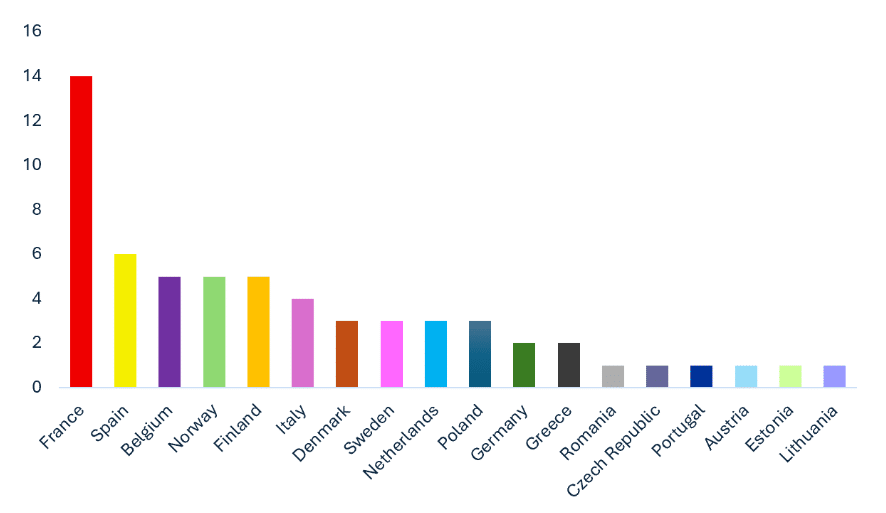
Figure 1. Distribution per country.
What have been the most awarded areas of the IF24 Call?
Projects have been classified into 16 different areas. However, they all fall within four categories: energy-intensive industries, renewable energy, energy storage, and net-zero mobility (including maritime and aviation) and buildings.
The 61 projects have the potential to significantly reduce greenhouse gas emissions, cutting some 221 million tonnes of CO₂ equivalent over their first decade of operation. This is comparable to the annual emissions of 9.9 million average European cars. This reduction will directly support the EU’s objective of achieving climate neutrality by 2050.
Awarded Projects in the IF24 Call
The 61 selected projects can be classified as follows:
General descriptions – Large Scale Projects
| Name | Sector | Location | Description | Coordinator | Coordinator Type |
| AirvaultGoCO2: First large-scale CCUS network for deep inland emitters starting from the Europe’s first zero water intake cement plant | Cement & lime | France | AirvaultGoCO₂ aims to implement Europe’s first fully integrated netzero carbon, zero-water cement plant by introducing carbon capture, utilisation and storage (CCUS) in an inland facility in France to decarbonise cement production. The project will deliver system-level innovation through decarbonisation across the full value chain. It combines clinker and calcined clay co-production with 100% waste heat recovery and use, carbon capture, use of biomass-based alternative fuels and a closed-loop water-recycling system enabling the first Zero Water Intake plant in Europe. This configuration achieves a significant increase in energy efficiency and reduced emissions, as well as a 95 % capture rate of remaining emissions. The project offers strong replicability potential, enabling rapid clinker substitution with locally sourced materials and large-scale CCUS integration, serving as a blueprint for decarbonising deep inland industrial clusters. | Heidelberg Materials France Ciments | LE |
| ANTHEMIS: Antoing Heidelberg Materials Emissions Integrated System | Cement & lime | Belgium | ANTHEMIS aims to retrofit an existing inland cement plant in Belgium, with an integrated advanced carbon capture solution (CCS) to produce net-zero carbon cement. The captured CO2 will be transported via a dedicated pipeline for permanent storage in the North Sea. The project will implement an optimized oxyfuel combustion technology coupled with a high-efficiency CO₂ purification system, achieving up to 98 % CO2 capture. This carbon capture solution will be complemented by the use of renewable electricity, waste heat recovery and zero liquid discharge to maximise energy and resource efficiency and ensure full water circularity. By establishing a replicable model for decarbonising Europe’s inland cement plants, the project will contribute to the development of the CCS value chain across Western Europe. | Heidelberg Materials Benelux | LE |
| APOLLOCO2- LT:Creation of an innovative and cost-efficient CO2 management solution to heavy industrial emitters through a Liquefaction Export Terminal, leveraging on the CCS hub approach. | Other | Greece | APOLLOCO2-LT aims to establish an open-access carbon capture and storage (CCS) hub in South-Eastern Europe, featuring a liquefaction export terminal, comprising an onshore and offshore unit, and offer temporary storage before its transportation to permanent storage sites. The facility will receive gaseous CO2 via a pipeline network, liquefy it by leveraging energy from LNG regasification, utilising renewable energy sources and handling low-pressure CO2, the project will optimise the CCS value chain in terms of efficiency and sustainability. By delivering an open-access CCS hub, the project creates economies of scale that lower the CCS costs per tonne of CO2, stimulate a regional supply chain in South-East Europe, and provide a replicable business model for EU-wide CCS infrastructure deployment. | DIAXIRISTIS ETHNIKOU SISTIMATOS FISIKOU AERIOU ANONIMI ETERIA. HELLENIC GAS TRANSMISSION SYSTEM OPERATOR | LE |
| CARBON HUB CPT01: CARBON HUB CPT01 | Cement & lime | Romania | CARBON HUB CPT01 will install a common carbon-capture plant in Romania collecting CO2 from two neighbouring cement clinker and lime plants. The captured CO2 will be transported via a newly constructed pipeline and permanently stored in a retrofitted onshore storage site in Romania, all being part of the project. The project’s innovation lies on a first-of-its-kind shared capture unit for two neighbouring plants, encompassing lime kilns upgrades, optimized capture technology, and a closed-loop water recycling circuit between these facilities. It also establishes the first large-scale onshore CO2 storage site in Europe using existing infrastructure by large-scale retrofitting of its wells. The project will kick-start the development of the first CO2 transport pipeline and onshore storage in Romania, while also fostering the production of low-carbon cement and lime. The pipeline is strategically aligned with the future trans-European CO2 transport network. | HOLCIM ROMANIA SA | LE |
| DEZiR : Decarbonation en Seine-Eure et sur la Zone industrielle de Rouen | Refineries | France | DEZiR aims to contribute to the decarbonisation of the aviation sector and strengthening of EU energy resilience by establishing one of Europe’s first large-scale electric sustainable aviation fuel (eSAF) production plants. The project will commercially integrate at a large-scale the various technological elements involved in the e-SAF production process (CO2 capture unit, electrolyser, methanolation, Methanol-to-Jet). The biogenic CO2 will be recovered from biomass boilers. The project will increase the technology readiness of the e-SAF production process, facilitating the development of similar projects through standardisation and a clear replication approach. It will also contribute to the creation of Europe’s low-carbon jet-fuel market, supplying sustainable aviation fuel to major Western European air hubs. | Verso Energy | SME |
| DREAM: Decarbonisation of the Rezzato and Mazzano cement plant | Cement & lime | Italy | DREAM aims to deliver Italy’s first full‑scale, full‑chain CCS for cement production by deploying hybrid carbon capture technologies. The captured CO2 will be transported via pipeline to a depleted gas reservoir in Italy for permanent storage. The main innovation of the project lies in the combination of Oxyfuel‑advanced cryogenic capture for grey clinker with amine capture for white clinker, interconnected through a cost and energyefficient waste‑heat recovery that powers solvent regeneration without external energy input, processing the captured CO2 into a single high‑purity stream enabling efficient pipeline transport. The project will demonstrate an economically viable CCS business case for inland locations and fostering the regulatory framework for CCS in Italy. | Heidelberg Materials Italia Cementi SPA | LE |
| ENDOR: Arcadia eFuels: decarbonizing aviation | Refineries | Denmark | Arcadia eFuels will build a first-of-a-kind, large-scale commercial power-to-liquid plant in Denmark, to produce electric Sustainable Aviation Fuel (eSAF) to decarbonise the hard-to-abate EU aviation sector and, as secondary product, eNaphtha (eNAP) for use in the EU road transportation or chemicals sectors. The project will integrate proven gas-to-liquid technologies with renewable electricity, biogenic CO₂ and hydrogen production, demonstrating a novel configuration with the best-in-class reliability, energy efficiency, land use, water consumption, and GHG savings. Key innovations include seawater desalination using recovered waste heat, oxy-fired heating for carbon recovery, anaerobic digestion, and high carbon circularity. The project will support the establishment of commercial supply of RFNBO-compliant eSAF in Europe, reducing reliance on fossil jet fuel and demonstrating the viability and replicability of eSAF production in the EU. | Arcadia eFuels Vordingborg ApS | SME |
| LUXIA: Large-scale integrated production of renewable methanol and ammonia | Chemicals | Spain | LUXIA will demonstrate in Spain the first-of-its-kind large-scale integrated production of renewable hydrogen (from both biological and non-biological origin) and two renewable derivatives: methanol and ammonia. The project will introduce an innovative Hydrogen Ring, a novel hydrogen distribution system designed to optimise the combination of multiple renewable hydrogen sources and manage supply to different off-takers based on their real-time needs. The Hydrogen Ring combines physical and digital components to optimise hydrogen production, storage, and distribution. The project will contribute to the decarbonisation of hard-to-abate industries, such as maritime sector and fertilizer industry, while also reinforcing the “Andalusian Green Hydrogen Valley” project of common interest. | COMPANIA ESPANOLA DE PETROLEOS SA | LE |
| ReSTart: Renewable e-SAF Tartas | Refineries | France | ReSTart aims to build and demonstrate one of Europe’s first largescale electric sustainable aviation fuel (e-SAF) production plants in France. The project will perform a large-scale commercial integration of the various technological elements involved in the e-SAF production process, by recovering biogenic CO2 produced during cellulose production processes. The project will contribute to the creation of Europe’s domestic low-carbon jet-fuel market, supplying Paris-CDG and Amsterdam-Schiphol airports, and generating a new high-tech value chain for European industry. | Verso Energy | SME |
| VAIA: Vicat Advanced Industrial Alliance | Cement & lime | France | The VAIA project will decarbonise France’s largest cement plant by reducing clinker content and installing a large-scale carbon capture unit. The captured CO2 will be transported via a repurposed oil pipeline to a depleted gas reservoir for permanent storage in Italy. To reduce the clinker content, the project will implement electromechanical activation of raw materials, which will be combined with an electrified CCS system with heat integration. This approach reduces energy use, CO2 emissions and costs. VAIA proposes a scalable and replicable blueprint for the decarbonization of the cement sector. The project also targets the aggregation of over 150 industrial emitters from the Rhône Valley and beyond into a unified decarbonisation effort. | Vicat | LE |
General descriptions – Medium Scale projects
| Name | Sector | Location | Description | Coordinator | Coordinator Type |
| Alpha One: Alpha One: A breakthrough project decarbonising industrial heat at scale through innovative Iron Fuel Technology™, pioneering a circular energy system and accelerating Europe’s clean energy transition | Other | Belgium | The Alpha One project aims to decarbonise high‑temperature heat at scale with a recyclable iron‑powder carrier which can deliver hot water, steam, or hot air tailored to various industrial needs. It also establishes a circular Iron Fuel supply chain. The project’s innovation centres on a closed‑loop system where the product – Iron Fuel – is transported to multiple industrial sites. Iron oxide is collected from end-users and returned for regeneration, then the fuel is renewed using hydrogen before being redistributed. This generates fossil-free heat with near‑zero CO₂ and low nitrogen oxide (NOₓ) emissions. By creating a circular supply chain for iron fuel, the project contributes to reshaping the industrial heat supply and to accelerate the transition to a net-zero future across Europe’s industrial landscape. | Renewable Iron Fuel Technology B.V. | SME |
| BIOVIND: Heygaz Biovind: Advancing Sustainable BioLNG Production and Waste Valorization | Refineries | Norway | The BIOVIND project will develop a facility to collect organic waste from nearby farms and food industries and convert it into clean gas, natural fertiliser, and reusable carbon dioxide in Norway. The project advances beyond current commercial and technological standards by integrating a combination of mature biogas technologies with cutting-edge innovations to significantly improve efficiency and economic performance. It is designed to run efficiently year-round with systems that minimise noise, odour, and environmental impact. By establishing a regional circular‑economy solution, the plant brings together farmers, food producers, and energy companies to produce bioproducts that will replace fossil-based alternatives, helping to reduce pollution and greenhouse gas emissions. | Biovind AS | Not Found |
| BMS: BIO MATERIAL SCALING – Expanding PaperShell cellulose composites production enabling high GHG reduction through material substitution and circular bio economy. | Buildings | Sweden | The BMS project from Sweden aims at scaling up the PaperShell technology, offering a new material logic for the circular bioeconomy: a high-performance composite made of kraft paper and a biogenic binder, replacing plastics, fiberglass, and aluminium. The project will commercialize an innovative high-performance composite material, made of kraft paper and a biogenic binder, as well as a novel biogenic Copper‑Clad Laminate line that enables material substitution across industries. It will combine proprietary production steps, such as dry forming, impregnation, pressing, trimming and bio‑char conversion, to create a modular circular plant. With plans for replication at five strategic sites across Europe, the BMS project has the potential to drive significant environmental impacts, including the replacement of fossil inputs, regeneration of soils, and enhanced EU sovereignty, ultimately contributing to a more circular and resilient economy. | PaperShell AB | SME |
| COnet2 Sea: Pioneering CO₂ Maritime Transport for CCS Across the Mediterranean | Other | Spain | COnet2 Sea aims at demonstrating a replicable, large‑scale low‑emission maritime CO₂ transport service, shipping liquefied CO₂ (LCO2) from cement plant to a permanent geological storage in Spain. The project will develop and operate a medium-pressure LCO₂ vessel, designed to maintain CO₂ in liquid form. The ship will integrate an innovative boil-off gas management system using the cold from the bio-Liquefied Natural Gas (LNG) fuel, an onboard CO₂ capture unit using zeolite technology, and bio-LNG propulsion to minimise lifecycle emissions The project can serve as a strategic enabler for emerging Carbon Capture, Utilisation, and Storage (CCUS) hubs in Europe by providing a flexible, scalable, and regulation-compliant transport solution and bridging a key gap in the Carbon Capture and Storage (CCS) value chain. It will accelerate industrial decarbonisation and position maritime CO₂ transport as a core element of the EU’s net-zero strategy. | SCALE GREEN ENERGY S L | SME |
| eSeaRiverBarge: First-of-a-kind zero-emission sea-river container liner service demonstrating energy-as-a-service concept based on swappable containerised energy storage | Maritime | Netherlands | The eSeaRiverBarge project aims to demonstrate a first-of-a-kind zero-emission sea-river shipping service for containers between the Netherlands and the UK by building and operating two ships with innovative propulsion systems. The project will utilize a combination of technologies, including wind-assisted propulsion, air lubrication, electric engines, and innovative Energy-as-a-Service (EaaS) swappable Li-ion batteries, to achieve zero emissions. Energy efficiency is maximised by complementing optimal hull form. The commercial deployment of innovative EaaS swappable energy storage concept in the project summed with the other installed technologies contributes to decarbonising waterborne transport and paves the way for scaling the concept Europe-wide to short-sea shipping. | Banier Scheepvaart B.V. | SME |
| GREENFIELD BIOGAZ: GREENFIELD BIOGAZ: Closing the loop from paper sludge to green gas | Refineries | France | GREENFIELD BIOGAZ aims at developing an industrial-scale biogas plant at a pulp and paper production facility in France that will convert paper sludge into renewable biogas. The produced biogas will be initially injected into the grid and gradually shifted to onsite self-consumption. The core innovation is a biomimetic mono‑digestion reactor design optimized for low‑organic paper sludge and coupled with precise nutrient injection systems (urea, diammonium phosphate) to ensure biological stability. This will be the first commercial facility worldwide to use only paper sludge in mono-digestion. The project offers a highly replicable, robust, scalable solution to decarbonize an energy-intensive sector, cut waste, and contribute to EU climate and energy sovereignty goals. | Greenfield Biogaz | LE |
| H2CWAY: New IVECO BUS hydrogen fuel cell intercity bus range | Road transport | Czech Republic | H2CWAY aims to develop and manufacture two types of hydrogen‑fuel‑cell intercity buses to decarbonise suburban and regional public transport in the Czech Republic. The project will offer the first hydrogen‑fuel‑cell intercity buses manufactured in the EU, which will combine a certified fuel‑cell powertrain that meets performance, safety and cost‑competitiveness targets with low entry or normal floor chassis. H2CWAY buses will reduce reliance of the public transport sector on fossil fuels and provide a financially viable and reliable alternative for bus fleet operators. More broadly, the project will benefit passengers, drivers, urban residents, and the wider European public transport value chain. | Iveco Czech Republic, A.S. | LE |
| Leopard: LimE OPeration decARboniseD | Cement & lime | Belgium | Leopard aims at establishing a first-of-a-kind industrial deployment of a hybrid solution tailored to decarbonize lime plants operating vertical multishaft lime kilns. At its core, the innovation lies in a hybrid retrofit that integrates retrofitted kilns for CO2 preconcentration with a membrane-based carbon capture unit. This synergy increases the CO₂ concentration in kiln flue gases before capture, resulting in significantly lower operating costs compared to conventional post-combustion capture technologies. Moreover, this approach eliminates the generation of any additional air emissions, hazardous or chemical waste, while also being water neutral. The technology relies only on electrical energy, making it an attractive solution for widespread adoption for decarbonizing the lime sector. Notably, it can be replicated in more than 80 % of European lime plants. | CARMEUSE SA | LE |
| MECACLAY: MeCaClay: Green Cement Production through MechanoChemical Activation of Clay | Cement & lime | Lithuania | MECACLAY will deploy a first-of-its-kind industrial scale lowclinker, low-emission cement production plant in Lithuania. It will produce a sustainable cement mix with 50% lower clinker to cement ratio compared to traditional cement types. The project will be the first industrial-scale implementation of a breakthrough technology, that can be used to reduce clinker content in cement by substituting it with supplementary cementitious materials. The technology used of the fully-electrified mechano-chemical activation is less carbon-intensive and more effective compared to alternative methodologies such as thermal activation of clays. The project can contribute to the creation of an EU‑wide, replicable supply chain for a low‑clinker cement and provide a proven pathway for decarbonising the European cement sector. | AB Akmenes cementas | LE |
| NotNukeOne: Large-scale AgriPV with AIoptimized energy storage and trading | Solar energy | Finland | The NotNukeOne project aims to develop the first large‑scale agrivoltaic park in Finland that simultaneously generates solar electricity and supports agricultural productivity, directly contributing to the country’s renewable‑energy goals, while preserving arable land. The project introduces an advanced single‑axis tracking system, which can enhance energy yield by up to 25%. The integration of a Battery Energy Storage System combined with an AI platform will improve efficiency and grid stability. An AI-optimized energy trading will open for dynamic participation in various energy markets, minimizing price volatility and optimizing revenue. NotNukeOne presents a replicable concept for other sites in Europe. Using cutting-edge technology combined with advanced innovative features, the concept is designed to scale efficiently and integrate seamlessly with local conditions and market systems. At the same time the project promotes agricultural yield and provides economic benefits to farmers through additional revenue streams. | Alight Ostonen Oy | Not Found |
| OTO: Disruptive calcination process for plasterboard manufacturing | Glass, ceramics & construction material | Spain | The OTO project will deliver the first commercial‑scale, low‑carbon plasterboard production line in Spain, achieving a 30% reduction in energy consumption and 50% decrease in water usage. The project’s innovative approach centres on a disruptive, electrically‑driven calcination process that replaces natural‑gas firing, combined with advanced energy‑efficiency measures. The OTO project offers a replicable model that can be applied to other plasterboard sites across Europe, enhancing regional industrial resilience, and promoting a more sustainable future and reduced dependence from natural gas imports. | SAINTGOBAIN PLACO IBERICA SA | LE |
| PP2XH : Pärnu P2X Hub | Refineries | Estonia | PP2XH aims to establish a fully sustainable e-methanol value chain in Estonia, focussing on regions with limited or carbonintensive grid access, by integrating renewable energy, green hydrogen, and methanol synthesis. It will produce low carbon e-methanol for the maritime shipping industry and green hydrogen for land transport applications. The project combines mature clean technologies with an innovative AI-powered microgrid, to optimize energy production and consumption in real time. Additionally, the project utilizes biogenic CO₂ from biomethane plants, converting a previously underutilised by-product into a valuable economic resource. The PP2XH project is a blueprint for decentralised emethanol production and supports resilient, green fuel supply chains aligned with EU climate goals. | Pärnu P2X Hub OÜ | Not Found |
| RECLAIM: Renewable Energy Cluster for AgroIndustrial Methanol Production | Refineries | Denmark | The RECLAIM project aims to deploy a first-of-a-kind commercial scale plant in Denmark for the production of green methanol, biomethane, and digestate fertilizer. Local waste streams are transformed into sustainable, low‑carbon fuels and fertilizers, which are then fed back into the local agricultural sector, fostering a closed-loop circular economy. The project will employ a novel combination of innovative technologies and circular, integrated waste-to-value processes. The innovation includes a novel business‑model concept, which targets the valorisation of existing biogenic waste streams, converting agricultural biomass wastefractions, biogenic CO₂ and renewable electricity into highvalue products. The project supports environmental, economic and commercial sustainability and strategic competitiveness by reducing dependency on the import of fossil raw materials by transforming waste streams into high value products. | BioCirc Group | LE |
| ReNova ChemPET: ReNova ChemPET – Polyester Chemical Recycling Plant in Cerano | Other | Italy | ReNova ChemPET aims to launch Europe’s first industrial‑scale plant in Italy deploying a zero GHG emission chemical recycling technology, which converts polyester waste into pure monomers, with the added capability to process polyethylene terephthalate (PET) packaging waste. The project will be a first-of-a-kind commercialisation of the ChemPET technology at an industrial scale. The ReNova ChemPET projects proposes an innovative process, reducing reliance on virgin materials and promoting a circular economy. It allows vertical replication, with a scalable capacity, driving a substantial impact on the region’s plastic waste management and recycling landscape. | SAIPEM S.P.A. | LE |
| SCOOP: Sustainable CoProcessing of challenging raw materials | Refineries | Finland | SCOOP project aims to transform a crude oil refinery in Finland into a leading renewable and circular solutions refining hub. The project’s innovative technology introduces a novel raw material, derived from tall oil, which can be efficiently converted into advanced biofuels. Furthermore, the process heating is decarbonised through an innovative smart electrification solution. The SCOOP project technologies have far-reaching potential to unlock the processing of a diverse range of advanced biofuel raw materials into high-quality renewable fuels and sustainable raw materials for the polymers and chemicals industry, enabling the development of a more circular and sustainable economy. | NESTE OYJ | LE |
| SCW Steel CleanUp: SCW Steel CleanUp – The first commercial scale deployment of Steel CleanUp, a groundbreaking technology that transforms steel plant waste streams into valuable green materials. | Cement & lime | Sweden | SCW Steel CleanUp aims at installing a first-of-a-kind plant for the treatment of steel slag waste streams, transforming previously underutilized resources into valuable materials.The technology represents an innovation in circular economy solutions for the steel industry, combining established mining industry techniques with a novel chemical recycling process, to upcycle steel slags into high-quality and highvalue materials such as calcium, silica, magnesium, and metals, through a closed-loop chemical separation process.The project offers an alternative treatment route for steel slag and allow the recovery and re-use of valuable materials, reducing the need for virgin materials and significantly decreasing scope‑3 emissions, thereby contributing to a more sustainable steel production process. | SCW Systems B.V | SME |
| Thermolysis: Τhermo-lysi SA End-of-Life Tyres (ELTs) recycling facility utilizing innovative made-in-Europe Pyrolysis technology | Chemicals | Greece | THERMOLYSIS will build a first-of-its-scale innovative End-of-Life Tyres (ELTs) processing and recycling facility in Greece, achieving a significant material recovery rate of over 95% and reusing more than 75% of the recovered materials in new applications, thereby significantly reducing waste and promoting a circular economy. The new facility will deploy an innovative pyrolysis technology, which not only enables the efficient recycling of ELTs, but also generates synthetic gas that will meet approximately 60% of the facility’s energy requirements, reducing reliance on external power sources and minimizing its carbon footprint.The project’s planned replication across Europe and other regions ensures sustainability and serves as a benchmark for future ELT recycling initiatives aligned with EU environmental regulation. | Thermo Lysi S.A. | Not Found |
| VIPER: Viken Industrial Pyrolysis for Emissions Reduction | Iron & steel | Norway | The VIPER Project will demonstrate a first-of-its-kind efficient, sustainable and circular pyrolysis biorefinery in Norway. The biorefinery will convert locally sourced woody byproducts into biocarbon, biochar, and bio-oil for use as reducing agents in metallurgical industry and as bitumen replacement in asphalt. The project will support the business case of decarbonising Europe’s metallurgical industry by replacing fossil carbon with renewable, domestic reducing agents. This will lower the dependence of the sector on imported metallurgical coal, while supporting sustainable forest management and fostering a regional economy development. | Vow Green Metals AS | SME |
| W2BIOFUEL: Pyrolysis Plant for the production of Biofuels from Waste Wood Biomass | Refineries | France | The W2BIOFUEL project aims to produce biocarbon and biooil as sustainable alternatives to petroleum coke (petcoke) in hard-to-abate industries, such as cement and steel. The produced biofuels will be delivered to a nearby cement plant in France to partially replace petcoke consumption. The project will use slow pyrolysis of waste wood to produce biocarbon and bio -oil with properties suitable for replacing petcoke, employing a mixture of unsoiled wood raw materials comprising waste wood and wood chips as feedstock. The W2BIOFUEL project can maximise synergies in the integration of biogenic wastes, the pyrolysis process and clinker production to contribute to Europe’s climate and circular economy goals. | IDEX INFRA | LE |
General descriptions – Small Scale projects
| Name | Sector | Location | Description | Coordinator | Coordinator Type |
| Absorption Heat Pump: Absorption Heat Pump for waste steam from a WtE plant to preheat district heating | Other | Germany | Absorption Heat Pump will integrate an absorption heat pump into a waste‑incineration plant, to capture the waste heat from the cold exhaust of the steam turbine. The captured energy will be used to pre‑heat district‑heating water and raise overall system efficiency. The project’s innovation lies in using residual turbine steam to power a large‑scale absorption heat pump, which will pre heat the district heating water to 95 °C, cutting electricity losses and increasing the extractable power for the district heating without increasing the fuel consumption. The project will implement a first large scale absorption heat pump for residual steam, providing a proven, low‑risk model for other plants and strengthening regional energy independence. | EEW Energy from Waste Großräschen GmbH | LE |
| ENGINEUS PULL: ENGINeUS 100 Production and sUpport piLot Lines | Aviation | France | ENGINeUS PULL aims to industrialise a fully electric motor for trainer aircrafts and a hybrid-electric motor for regional aircrafts by establishing a semi‑automated assembly line and logistics support line in France, delivering certified electric propulsions. The project aims to industrialise the production of a CS‑23‑certified electric motor delivering up to 125 kW motor with a modular architecture, enabling zero CO₂, NOₓ and SOₓ emissions. The motor addresses full-electric propulsion for trainer aircrafts, and hybrid-electric propulsion for regional aircrafts. The ENGINeUS PULL project contributes to building a sovereign, market‑driven supply chain for electric propulsion systems for aviation, creating high‑skill jobs and reinforcing Europe’s industrial leadership in the aviation sector. | SAFRAN ELECTRICAL & POWER | LE |
| GREEN HEAT ASTURIAS: Green heat for the decarbonisation of industry in Asturias | Solar energy | Spain | GREEN HEAT ASTURIAS aims to electrify industrial heat generation by deploying an innovative Thermal Energy Storage (TES) solution to help industrial customers achieve their decarbonization goals. The core innovation combines onsite photovoltaic generation, a high‑efficiency TES unit and a Plant Control and Energy Management System, giving rise to an integrated solution for renewable heat production. The project will deliver an industrial‑scale renewable heat model offering short-term green alternatives to address the strong dependence of the industrial sector on natural gas and unlocking the exploitation of renewable heat that can be replicated at regional, national and European level. | IBERDROLA CLIENTES SOCIEDAD ANONIMA | LE |
| H2EAT: Industrial Deployment of a Flameless HydrogenBased Heating System for Residential Buildings | Manufacturing of components for renewable energy | Italy | H2EAT will industrialise a zero‑emission residential heating system based on flameless catalytic hydrogen combustion by launching a dedicated production line for manufacturing a 25- kW wall‑mounted hydrogen boiler in Italy.The projects’ innovation is the boiler, which operates via a low-temperature catalytic reaction and eliminates both CO₂ and NOₓ emissions, combining air pre‑heating, exhaust‑gas recirculation and direct hydrogen injection to deliver a safer solution with over 100 % thermal efficiency, allowing operations with non-flammable hydrogen‑air mix at pressures aligned with existing gas distribution networks. The H2EAT project will create a scalable domestic hydrogen‑boiler market, strengthening energy self‑sufficiency, enhancing grid stability, and fostering a cross‑sector supply chain that will be replicable across EU climates and energy communities. | GIACOMINI SPA | LE |
| INSPIRE-PV: INdustrial Scale-up of high-value PV REcycling | Non-ferrous Metals | Spain | INSPIRE-PV will deploy the world’s first large‑scale high‑value photovoltaic (PV) recycling facilities, across two sites in France and Spain, to recover critical raw materials from end‑of‑life PV modules. The project’s core innovation combines pyrolysis, chemical separation and advanced sorting technologies to achieve exceptionally high material recovery rates, delivering ultrapure silicon and high-purity silver. The INSPIRE‑PV project will establish a replicable, economically viable and EU‑wide circular model for PV‑waste management, reducing dependence on imported critical raw materials and fostering a cross‑sector ecosystem of recyclers, manufacturers and stakeholders, ultimately strengthening the EU’s renewable energy supply chain and contributing to a more circular and sustainable economy. | ROSI | Not Found |
| LCSCM: NeoCem LowCarbon Supplementary Cementitious Materials | Cement & lime | France | LCSCM from France aims to produce a low‑carbon supplementary cementitious material (SCM) from readily available, abundant clay resources, providing a scalable solution to bridge the gap in SCM supply and reduce the clinker factor significantly by 2035 in line with the EU target. The project introduces an innovative calcination process that emits no CO₂ emissions from the raw material and significantly reduces energy consumption compared to conventional clinker production methods. This is combined with a versatile production line that can efficiently process a wide range of clays, enabling the production of low‑carbon cement. The LCSCM project will create a pan‑European, circular supply chain that unlocks the value of excavated clays, ensures regional adaptability, and promotes a more sustainable and resilient construction industry. | NEOCEM HOLDING | SME |
| LEYMEL: Local Energy sYstem with Modular and Efficient hydro Loop | Other energy storage | France | LEYMEL aims to deploy a hybrid energy system that combines floating photovoltaics with small‑scale pumped‑hydro energy storage (PHES) responsive to grid constraints, offering a replicable, modular model for delivering long-duration storage and flexibility in areas with limited land availability. The project introduces an innovative hydraulic short‑circuit system, combined with digital control and predictive‑maintenance tools, enabling real-time modulation of pump power, thus able to provide key ancillary services such as frequency regulation and inertia emulation, features typically unavailable at this scale. The considered model is replicable and scalable as it offers a low‑impact storage solution that leverages existing reservoirs across Europe and builds EU industrial competence in hybrid hydro‑PV technologies. | tenergie | LE |
| Reprocover5.0: Deploying robust, scalable, and local thermoset recycling hubs to launch the first industrial-scale composite recycling line for a circular and low-carbon industry | Cement & lime | Belgium | Reprocover5.0 aims to deploy a groundbreaking facility in Belgium that will recycle and transform industrial thermoset and thermoplastic wastes, typically destined for landfills or incineration, into high‑value components, for infrastructure and construction applications. The project innovation combines crushing, sieving, extrusion‑mixing, melting and press‑molding under advanced smart process control, featuring a novel extrusion method that blends thermoset with thermoplastic waste, enabling a fully automated and circular production line. The project goes beyond the state of the art by enabling the first fully circular, sustainable and efficient solution for thermoset waste, using an automated process to convert it into final products and additives. The project will develop an integrated, replicable factory, allowing rapid replication across Europe, establishing a continent‑wide circular feedstock network, and stimulating the growth of new industrial clusters and high‑skill employment, ultimately contributing to a more sustainable and circular economy. | Reprocover | SME |
| WasteLessDHS: Efficient integration of Data Centers’ waste heat for zero-emission District Heating Systems | Other | Poland | WasteLessDHS aims to capture the low‑grade heat from a new data centre in Poland and to feed it into the city’s district‑heating network, lowering dependence on coal‑fired boilers. The project’s innovation involves a three‑stage water‑to‑water heat‑pump cascade that increases waste‑heat temperatures to district‑heating levels, integrated with a novel business model for data‑centre heat‑as‑a‑service. The WasteLessDHS project will demonstrate a replicable, heat‑recovery solution for integrating data centers with district heating systems across Europe that reduces energy dependency, lowers heating costs for residents and improves air quality. | Veolia Energia Warszawa S.A. | LE |
| WATTRAXIS: At the Strategic Axis of Floating Solar and Sustainable Watt Generation | Solar energy | France | WATTRAXIS aims to install a next‑generation floating photovoltaic solution on working quarry site in France, thus avoiding land‑use conflicts with natural or agricultural areas. The project’s innovation centres on the floating platform that combines east‑west panel orientation, a motorised maintenance system, shared anchoring and a resource‑optimised structure. The WATTRAXIS project will deliver a replicable, low‑environmental impact floating photovoltaic model that should allow for faster permitting and smoother community‑acceptance compared to greenfield alternatives. | SOLEIL ELEMENTS 26 | Not Found |
General descriptions – Pilots
| Name | Sector | Location | Description | Coordinator | Coor. Type |
| ASTRA PP: Advanced Solventbased Technology for Recycling in Antwerp, for PolyPropylene | Chemicals | Belgium | ASTRA PP aims at developing an innovative polypropylene (PP) waste purification process to produce Ultra-Pure Recycled PP (UPR-PP) from a variety of PP waste streams. The project will develop a breakthrough PP waste purification process, which will remove colour, odour, and other contaminants from plastic waste to transform it into UPR-PP, with purity comparable to virgin PP, but with a much lower environmental impact. The ASTRA PP project contributes to a circular plastics economy by transforming PP waste into a renewable resource that can be used multiple times and preventing it from ending up in incineration or landfill. | PureCycle Belgium Bv | SME |
| DEMONSTR8: A dual-Innovation for Scaling Sustainable Battery Recycling in Europe | Non-ferrous Metals | France | DEMONSTR8 aims at enabling the sustainable recycling of Li-ion Nickel Manganese Cobalt (NMC) batteries in Europe via a centralized hub in France that processes black-mass and end-of-life batteries, delivering battery-grade lithium, nickel and cobalt. The project’s main technological innovation lies in the scale-up of an innovative sulphate-free hydrometallurgical process, a clean alternative to conventional metallurgy, enabling selective lithium, nickel and cobalt recovery while eliminating sulphate discharges. This is combined with a centralised recycling hub integrating upstream and metallic recovery activities on a single site. The DEMONSTR8 project’s integrated model will contribute to a circular economy and a resilient European battery-material supply chain, generate skilled jobs, and provide a replicable hub model to strengthen EU strategic autonomy related to critical raw materials. | MECAWARE | LE |
| GESIIS: Geothermal Energy Storage and Innovative Integrated System | Geothermal energy | Italy | GESIIS aims to demonstrate a first-of-a-kind pilot deep decarbonisation solution for renewable heating through seasonal energy storage. The system is modular, replicable, and tailored to district heating applications with high and seasonal heating needs. The project integrates medium depth geothermal doublets, a novel high- temperature aquifer thermal energy storage system and a large heat pump, all coordinated via a digital- twin platform for real-time- optimisation and predictive maintenance. The project innovation is complemented by a novel business model combining a Special Purpose Vehicle structure with long-term Heat Purchase Agreements. The system’s modularity and tailoring to district heating applications strengthen its replicability. | FRI-EL GEOPOWER SRL | SME |
| HuCCSar: HUb for Carbon Capture and Storage to decarbonise the hard-to Abate Regions in Poland — HuCCSar | Other | Poland | HuCCSar will demonstrate an on- shore CO₂ hub, pipeline and storage system in Poland, showcasing a scalable and cost-efficient model for inland CO2 storage. The project’s core innovation is a fully integrated domestic hub that combines a purpose-built CO₂ pipeline, modular underground storage facilities and real time monitoring/control systems, leveraging existing regional infrastructure to enable rapid scaling of CCS in inland Poland.The pilot aims to build a local CCS supply chain, serving the central and the southern Polish industrial clusters, laying the groundwork for a full-scale CCS network. | GORAZDZE CEMENT SPOLKA AKCYJNA S.A. | LE |
| MAGHYC: Maritime Generation of Hydrogen with Carbon Capture | Maritime | Finland | MAGHYC will demonstrate the onboard hydrogen generation with carbon capture on a newbuild cruise ship, evaluating performance, efficiency- and scalability to support fleet-wide replication. The project will deploy an onboard Thermal Catalytic Decomposition (TCD) unit, utilising BioLNG as a feedstock, to produce ultra-low carbon hydrogen, while capturing solid carbon on the vessel as a valuable by-product. The MAGHYC project will establish a replicable model that strengthens circular economy- capabilities in the cruise ship sector, contributing to the decarbonisation of the maritime industry. | Royal Caribbean Cruises Ltd. | LE |
| MCC2Hub: Maritime Carbon Capture to Hub | Maritime | Netherlands | MCC2Hub will demonstrate a complete maritime-to-onshore carbon capture utilisation and storage (CCUS) chain in the Netherlands, capturing CO₂ from ships running with heavy fuel oil (HFO), liquified natural gas (LNG), e-methanol or biofuels and delivering it to EU hub networks for permanent storage or synthetic- fuel- production. The project integrates an onboard amine-based-solvent absorption unit that captures and store on board chemically binds CO₂ from ship exhaust gas and with centralised onshore plants that strip, purify, liquefy and prepare the gas for next step, either storage or fuel production. By creating the first end-to-end maritime CCUS value chain, the project supplies the EU with a replicable logistics and business model, generates verifiable carbon- removal credits for hard-to-abate sectors, and reinforces European leadership in green shipping hub infrastructures and circular carbon- markets. | Value Carbon BV | SME |
| NEXT HYDROMET: Next-generational hydrometallurgical recycling of battery materials | Road transport | Finland | NEXT HYDROMET will realise a hydrometallurgical recycling process of end-of-life Li-ion battery cells in Finland, enabling circularity in the battery value chain in Europe for the recovery and re-circulation of critical raw materials. The project will integrate a novel hydrometallurgical recycling process producing battery-grade metals through electrochemical processes and chromatographic separation of metals including lithium, nickel, and cobalt, enabling at a highly efficient recovery rate, while generating minimal waste and a reduced carbon footprint. The NEXT HYDROMET project will demonstrate a cost-effective solution to EV battery recycling with a leading technology to ensure clean industrial leadership, strengthen the security of supply of European battery value chain and accelerate the recovery of critical raw materials. | Fortum Battery Recycling Oy | LE |
| ODIN: Operation to Decarbonise Interconnectivity in Norway | Aviation | Norway | The ODIN project will retrofit 15 Cessna 208B Grand Caravans with hydrogen electric powertrain and operate them on cargo routes across 15 Norwegian regional airports, replacing kerosene propelled aircrafts with zero emission flights. The project’s innovation focuses on the replacement of conventional kerosene-fuelled turboprops by a low temperature proton exchange membrane (PEM) fuel cell powertrain retrofitted into existing airframes. Moreover, the project will complete the end-to-end ecosystem for hydrogen aviation, by deploying the necessary refuelling and storage infrastructure over 15 airports in Norway. ODIN aims at creating a replicable European hydrogen aviation ecosystem, catalysing a domestic hydrogen supply chain that accelerates EU wide adoption of zero emission regional air transport and pave the way for future hydrogenelectric operations at large scale. | ZEROAVIA LTD | LE |
| RjukanLH2: Scalable green liquid hydrogen shipping fuel supply chain from Rjukan to the Port of Oslo | Hydrogen | Norway | RjukanLH2 will demonstrate a Renewable Fuel of NonBiological Origin (RFNBO) liquid -hydrogen (LH2) supply chain for fuelling four novel LH2 -powered shortsea container vessels in Norway. The project will validate novel technologies for H2 liquefaction and LH2 bunkering, advancing their technology readiness and demonstrating the full RFNBO LH2 supply chain. These include a novel liquefaction plant coupled with LH2 cryogenic storage and truck loading, plus a new bunkering tower and ship–to–shore interface in the Port of Oslo. In terms of EU added value, the project will establish Europe’s first replicable green LH2 maritime fuel network, prove cost-competitive supply for shortsea shipping, and deliver data to accelerate the EU hydrogen market and energy security. | NORWEGIAN HYDROGEN AS | SME |
| SLALOM 2.0: Sustainable, Lowcarbon Advancements in LanzaFlex Operations for Manufacturing | Refineries | Norway | SLALOM 2.0 aims to build a commercial pilot plant in Norway that will integrate ethanol production from industrial off-gases using an innovative gas fermentation technology with CO₂ cleanup liquefaction and permanent storage. The ethanol will be used to produce sustainable aviation fuels (SAF) using the alcohol-to-jet process. The captured CO2 will be transported for permanent storage in the North Sea. The project will implement a high efficiency bioreactor design with engineered microbes to convert carbon monoxide and hydrogen from industrial off-gases into ethanol, creating a concentrated CO₂ stream for liquefaction in a single facility. The pilot can be upscaled and replicated for different industrial off-gases, gasified biomass or municipal solid waste, or be integrated with green hydrogen to handle CO₂- based feedstocks. Widespread adoption will greatly reduce emissions and foster local renewable fuel markets. | LanzaTech Exelixis SPV AS | LE |
| TAKE KAIR: TAKE KAIR | Refineries | France | TAKE KAIR aims to build a first-of-a-kind industrial‑scale e‑SAF (electro-Sustainable Aviation Fuel) production plant in France. The project will also produce e‑Naphtha, contributing to the decarbonisation of both the EU aviation and chemical sectors. The project’s main innovation lies in coupling fully‑traced and certified biogenic CO₂ from waste‑biomass combustion with renewable electricity to power a high‑efficiency electro‑fuel synthesis unit, while minimizing environmental impact by using reclaimed water from nearby wastewater treatment plants.The proposed plant will foster a domestic e‑fuel value chain, create a replicable model for CO₂ valorisation and renewable power integration, and strengthen the EU supply chain and industrial competitiveness | HYNAMICS | SME |
General descriptions – Manufacturing
| Name | Sector | Location | Description | Coordinator | Coor. Type |
| BIOMEMBRANE: Manufacturing Efficient Membrane Cartridges for Biogas UpgRading to Achieve Europe’s NEtZero Policy Goals | Manufacturing of components for renewable energy | Netherlands | The BIO-MEMBRANE project will build a net‑zero manufacturing facility in the Netherlands to produce a novel generation of membrane systems for upgrading biogas into biomethane. The core innovation lies in the production of advanced hollow‑fibre membrane cartridge systems that will reduce both capital and operational expenditure for biomethane production from biogas. The produced biogas can be directly injected into the existing gas grid and utilised without modifications to infrastructure or end-use technologies. The project will help to unlock Europe’s opportunity to embrace a biomethane-driven transition, given its well-developed gas network and the availability of abundant organic feedstock—ranging from agricultural residues and municipal waste to manure enhancing Europe’s energy autonomy and resilience. | Parker Hannifin ManufacturiNg Netherlands (Filtration and Separation) B.V. | SME |
| Fos3F: Floating Foundation Fabrication Line | Manufacturing of components for renewable energy | France | The project aims to construct and operate a first-of-a-kind factory in France for fabricating concrete floating foundations (FFs) for floating offshore wind (FOW) farms. The project’s main innovation is the use of proven, and certified technology for serial production of FFs made from an innovative low carbon concrete mix. Fos3F will create a resilient European supply chain, enabling the installation of 8 GW of FOW in the Mediterranean market and maintaining European leadership on the offshore wind industry. | IDEOL | Not Found |
| GRIP: Greenhouse Gas Reduction through Industrial Production of the Rotation Heat Pump | Manufacturing of components for renewable energy | Austria | GRIP will build an innovative production facility in Austria to manufacture last-generation Rotation Heat Pump (RHP) for industrial use with up to 50 % higher energy efficiency than conventional heat pumps. The RHP core innovation is a novel centrifugal Joule process that employs a nontoxic, non-flammable noble gas. In addition, GRIP project factory will utilize advanced manufacturing techniques, including electrochemical machining and diffusion bonding. Leveraging a fully European supply chain, the GRIP project will validate the technology and accelerate market adoption through its potential for replication across Europe. | ECOP TECHNOLOGIES GMBH | SME |
| H2PEARL: Highly integrated PEM electrolyser stack and scale-up of an automated AEM-ready production line with focus on customer needs and life cycle strategy | Manufacturing of components for EII | Germany | The H2PEARL project aims at establishing a new manufacturing line with high degree of automated production methods for PEM electrolyser stacks in Germany. The project’s innovation lies in the PEM stacks, which will have improved performance parameters and durability, ensuring cost competitiveness and addressing the circularity challenges. H2PEARL will aid the EU retain its strategic leadership in PEM technology, while also foster job creation and make a significant contribution to the energy transition. | SCHAEFFLER TECHNOLOGIES AG & CO. KG | LE |
| MEADOW: Made in Europe Assembly of Disruptive Offshore Wind | Manufacturing of components for renewable energy | Denmark | MEADOW aims to establish serial manufacturing of a new generation of offshore wind turbines featuring disruptive size and performance in Germany and Denmark. The project’s innovation encompasses not only the turbine design itself but also the manufacturing, pre-assembly, and installation processes that enable large-scale industrial deployment. The MEADOW project will contribute in enhancing EU’s energy independency and keeping the EU at the forefront of global industry and technology leadership. | SIEMENS GAMESA RENEWABLE ENERGY AS | LE |
| NEXTGEN CAM: Nextgeneration LNMO cathode active material manufacturing plant for use in lithium-ion rechargeable batteries | Manufacturing of components for energy storage | Portugal | NEXTGEN CAM will build the first-of-a-kind industrial‑scale Lithium Nickel Manganese Oxide (LNMO) plant in Portugal, manufacturing LNMO cathode active material (CAM). The innovation is a next generation cobalt‑free LNMO cathode with higher energy density, cycle life, lower cost, and significantly reduced environmental impacts, while using lithium more efficiently compared to existing market-leading materials The NEXTGEN CAM project will address the needs from the rapidly expanding industrial mobility market, including heavyduty applications which require fast-charging, long cycle life, and high performance, ensuring this breakthrough technology effectively meets EU’s future battery demand. | TOPSOE BATTERY MATERIALS A/S | SME |
| POLVOLT: Polvolt (ex. PROMETEAN) | Manufacturing of components for energy storage | Poland | POLVOLT aims to build an integrated, low‑emission recycling facility in Poland that will produce precious and base metals, along with the realisation of a large‑scale battery‑metals refinery to produce critical raw materials and supply metal salts for cathode manufacturing. The main innovation of the project lies in coupling advanced eco‑friendly metallurgical streams for gold, silver, palladium, copper, aluminium, lead, tin and iron recycling with a novel process recycling black mass from spent lithium-ion batteries and production waste to produce critical raw materials including nickel, cobalt, manganese, iron, and lithium. The POLVOLT project is an innovative, and environmentally sustainable industrial solution to ensure clean industrial leadership, strengthen the security of supply of the European battery value chain and accelerate the recovery of critical raw materials. | Elemental Battery Metals Sp. zo.o. | LE |
| REC2pCAM: First European direct recycling solution to pCAM fast production facility | Manufacturing of components for energy storage | France | REC2pCAM will establish a first-of-its-kind precursors of cathode active materials (pCAM) production process for nickel cobalt manganese (NCM) electric vehicle batteries, while integrating black mass refining through a hydrometallurgical process and pCAM synthesis into a direct, fully integrated facility in France. The project will use recycled eluate in aqueous form while also managing eluate variability using primary sulphates, bridging the gap between pilot-scale validation and full-scale commercial deployment. The REC2pCAM project will offer a scalable and transferable solution for sustainable battery value chains. Its modular, centralised model suits replication across Europe and adaptation to global markets. | ORANO HYDRO BATTERY RECYCLING | LE |
| SB-VARKAUS: SB-VARKAUS: SuperBattery production for high-frequency grid balancing | Manufacturing of components for energy storage | Finland | SB-VARKAUS will scale up a pilot line to a full production capacity of the proprietary SuperBattery-technology cells in Finland. The innovation of the SuperBattery cells is based on a niobium‑oxide anode that enables ultra‑fast charge/discharge, 50 000‑cycles life span, low internal resistance and minimal heat generation, bridging the gap between supercapacitors and batteries. The new product is ideal for high-frequency grid services and excels in demanding use cases.The SB-VARKAUS project will contribute European energy security and battery sovereignty by reinforcing regional value chains and sourcing of batteries for grid services, setting a benchmark for industrial rollout of advanced energy storage. | Skeleton Technologies OY | LE |
| Trollhattan: Trollhättan: Modvion Wooden Tower Scale-Up Factory | Manufacturing of components for renewable energy | Sweden | Trollhattan aims to build a high-volume manufacturing facility in Sweden dedicated to producing composite wood wind turbine towers. By using an innovative composite wood material that replaces traditional steel–concrete hybrid structures, the project enables the production of towers exceeding 150 m in height to support 6 MW+ turbines, while significantly reducing material, transportation, and installation costs. The project’s new wind-turbine towers address the growing demand for taller wind turbines optimized for low-wind-speed sites, and the first targeted market is across Germany and the Nordic countries. | MODVION AB | SME |
| VB1F: Voodin Blade 1st Factory | Manufacturing of components for renewable energy | Spain | The VB1F project in Spain pioneers industrial‑scale production of wooden wind turbine blades using Laminated Veneer Lumber (LVL) to be used for both new turbines and retrofit existing fleets across Europe. The blades combine structural strength with design flexibility, enabling high-performance, recyclable solutions. The automated, mold-free production process allows for adaptable blade geometries, significantly reducing tooling costs and environmental impact. The project provides an innovative sustainable alternative to conventional fiberglass-reinforced composites setting a new industry standard for circular wind blade design. | Voodin Blade Technology GmbH | SME |
Background information
The EU Innovation Fund is one of the world’s largest funding programmes for first-of-a-kind clean technologies, designed to help companies bring net-zero solutions to market at industrial scale and strengthen Europe’s climate leadership.
Financed by revenues from the EU Emissions Trading System, it will channel an estimated €30–38 billion into highly innovative projects between 2020 and 2030, covering areas such as renewable energy, energy storage, low-carbon processes in energy‑intensive industries, hydrogen, carbon capture, use and storage, and sustainable fuels. Unlike traditional research grants, the Innovation Fund focuses on large demonstration, pilot and first commercial deployment projects at higher technology readiness levels, typically covering up to around 60% of relevant project costs to de‑risk major investments and accelerate their path to market.
By backing these flagship projects, the Fund aims to deliver substantial greenhouse gas reductions, crowd in private capital, boost industrial competitiveness and play a central role in delivering the EU Green Deal and climate‑neutrality by 2050.